Alice: Where Medieval Grandeur Meets Modern Luxury Branding
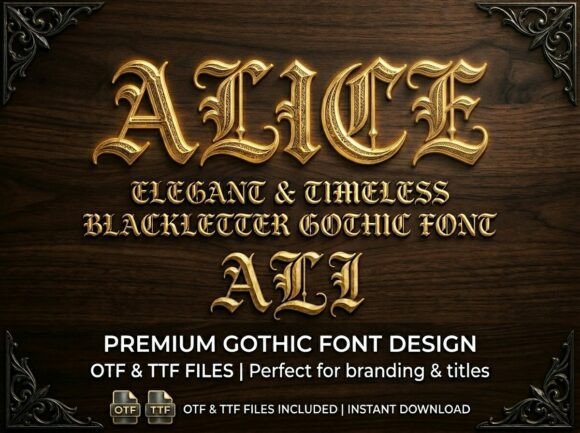
There's a particular kind of typography that stops you mid-scroll. It doesn't whisper—it commands. It carries the weight of centuries in every stroke, yet feels undeniably contemporary in the right hands. That's the space Alice occupies: a premium blackletter gothic font that channels the drama of ancient manuscripts without sacrificing the clarity modern design demands.
If you've ever held a bottle of high-end whiskey and felt the label alone told a story of craftsmanship and heritage, you've experienced what fonts like Alice accomplish. They don't just display words. They set a mood, establish authority, and create an emotional bridge between a brand and its audience. But Alice isn't reserved for distilleries alone. Its versatility stretches across industries and creative projects in ways that might surprise you.
The Craft Behind the Character
Alice draws its personality from the blackletter tradition—a style rooted in medieval European calligraphy, carved into stone and inked onto vellum by scribes who treated each letter as a work of art. What makes this particular typeface stand apart is how it balances that historical intensity with a refined elegance many gothic fonts lack. The sharp, dramatic terminals give each character a sense of precision, while the high-contrast calligraphic structure ensures legibility even at smaller sizes.
Think of it as the difference between a rough-hewn medieval sword and a finely crafted ceremonial blade. Both carry power, but one has been polished to a point where beauty and function coexist seamlessly. Alice belongs firmly in that second category.
Where Alice Truly Shines
Let's talk about real scenarios where this font earns its place in a designer's toolkit.
Spirits, Wines, and Artisanal Beverages
The craft beverage industry thrives on storytelling. A single malt scotch doesn't just sell itself on taste—it sells on provenance, tradition, and the feeling that you're holding something with history. Alice fits this world naturally. Picture it on a dark glass bottle with gold foil lettering, the kind of label you'd see on a shelf and immediately assume costs more than it does. It works for meaderies, small-batch gin producers, and boutique wineries that want their packaging to reflect the care inside the bottle.
Jewelry and Luxury Accessories
Artisanal jewelers face a unique challenge: their products are intimate, personal, and often expensive, yet they need branding that communicates trust and sophistication. Alice's heritage-luxe aesthetic solves this elegantly. Whether it's stamped on a jewelry box, etched into a website header, or printed on a velvet pouch, the font carries an inherent sense of permanence. It suggests that the piece you're about to purchase was made to last—not just physically, but emotionally.
Film, Television, and Gaming
Epic cinematic titles need typography that matches the scale of the story. Alice delivers that gravitas. Think fantasy film posters, dark drama series opening credits, or video game title screens set in medieval or gothic worlds. The font's hand-carved details create a tactile quality that feels cinematic even in a static image. It's the kind of typeface that makes an audience lean forward before the first scene even begins.
Editorial Design and Dark Academia Aesthetics
The dark academia movement—with its romantic obsession with classical literature, candlelit libraries, and intellectual pursuits—has created a massive demand for typography that feels scholarly yet moody. Alice is practically made for this space. Magazine headers, book covers, literary journal mastheads, and even social media graphics for book clubs or university publications benefit from its presence. It says, "This content is worth your time," without needing a single extra word.
Event Branding and Stationery
Gothic weddings, formal galas, themed corporate events, and theatrical productions all need invitations and signage that set expectations immediately. Alice transforms a simple event program into a keepsake. When guests receive an invitation set in this typeface, they already understand the tone of the evening before they read a single detail.
Who Benefits Most from Working with Alice?
Brand designers working with luxury clients find Alice invaluable when a project calls for heritage without stuffiness. It fills a gap between overly ornamental script fonts and sterile modern serifs, offering something that feels both storied and intentional.
Creative directors in entertainment use it to establish visual identity across posters, merchandise, and digital campaigns. A single typeface choice can unify an entire franchise's aesthetic, and Alice provides that anchor for projects rooted in fantasy, history, or drama.
Small business owners in artisanal industries—whether they're making candles, leather goods, or specialty chocolates—discover that Alice elevates their packaging and marketing materials to a level that competes with established luxury brands, even on a modest budget.
Content creators and bloggers in the dark academia, vintage, or historical niche use it for headers, thumbnails, and branded graphics that immediately signal their aesthetic to a like-minded audience.
Practical Considerations Before You Commit
Alice is a statement font, and like any bold choice, it comes with context-dependent trade-offs worth understanding.
Legibility at small sizes. Blackletter fonts inherently carry more visual complexity than sans-serifs or simple serifs. While Alice handles this better than many gothic typefaces thanks to its refined structure, you'll want to pair it with a clean, readable body font for longer passages. Reserve Alice for headlines, logos, and display text where its details can breathe.
Audience awareness. The medieval aesthetic resonates powerfully with certain demographics but can feel out of place in contexts that call for minimalism or tech-forward branding. A fintech startup probably shouldn't reach for Alice. A heritage watchmaker absolutely should.
Cultural associations. Blackletter typography carries historical baggage in some regions due to its associations with specific periods of European history. Most contemporary designers recognize that Alice's craftsmanship stands apart from those connotations, but it's worth considering your audience's cultural context, especially for international campaigns.
Pairing choices matter. Alice works beautifully alongside elegant serifs, clean sans-serifs, and even delicate scripts. The key is contrast without conflict. Let it dominate where it needs to—the logo, the headline, the hero text—and support it with typefaces that offer breathing room.
Making Alice Work for Your Project
The best way to evaluate whether Alice belongs in your next project is simple: look at the story you're trying to tell. If that story involves craftsmanship, tradition, luxury, drama, or a connection to the past, this font doesn't just support the narrative—it becomes part of it. Test it at scale. Set your headline, examine the letterforms, and ask whether the typeface adds meaning or merely adds decoration.
When the answer is meaning, you've found your font.
Alice doesn't try to be everything to everyone. It knows exactly what it is: a bridge between the grandeur of medieval artistry and the demands of contemporary design. And for the right project, that specificity is its greatest strength.