Captain Anchor: Integrating a Bold Nautical Typeface into Your Design Workflow
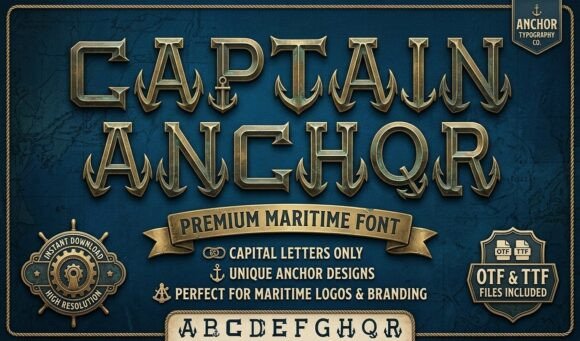
In the world of design and production, the selection of typography is rarely a casual aesthetic choice; it is a strategic decision that dictates the tone, legibility, and manufacturing viability of a project. When a brief calls for a maritime, collegiate, or industrial aesthetic, standard sans-serif fonts often fail to convey the necessary weight or thematic resonance. This is where Captain Anchor enters the production pipeline. It is not merely a decorative typeface but a specialized tool designed to merge heavy varsity block styles with distinct nautical elements, specifically the anchor fluke hooks integrated into the letter bases.
Understanding where Captain Anchor fits within a broader workflow requires looking beyond the font preview. It involves analyzing compatibility with manufacturing hardware, assessing scalability for various media, and ensuring it supports the message of the final deliverable. Whether you are a freelance designer creating brand identities or a hobbyist operating a vinyl cutter, this font serves as a foundational asset for coastal and sport-themed projects.
Analyzing the Structural Composition of Captain Anchor
Before implementation, it is essential to understand the structural characteristics of the typeface. Captain Anchor is classified as a display font, meaning it is optimized for headlines, logos, and short bursts of text rather than long-form body copy. Its design relies on high visual impact, utilizing thick strokes and blocky geometry that evoke the sturdiness of collegiate lettering. However, the defining feature is the modification of the baseline characters. The integration of anchor flukes into the descenders and feet of the letters creates a continuous visual rhythm that is unmistakably nautical.
From a workflow perspective, this structural density offers significant advantages in contrast and visibility. When planning a layout for a t-shirt or a banner, the boldness of Captain Anchor ensures that the text remains legible from a distance. This reduces the need for complex outlining or drop shadows that can complicate the cutting or printing process later in the workflow. The font does the heavy lifting of visual weight, allowing the designer to focus on composition and color theory.
Strategic Application in Product Design and Manufacturing
The true value of a specialized font like Captain Anchor is realized during the manufacturing preparation phase. It is highly recommended for specific applications where clarity and thematic consistency are paramount. By identifying the end-use of the typography early in the planning stage, creators can avoid costly revisions.
For professionals in the apparel industry, particularly those focused on fishing apparel, maritime sports teams, or coastal branding, Captain Anchor provides a ready-made solution that aligns with audience expectations. The font is engineered to perform well across various production methods, including Direct-to-Garment (DTG) printing, screen printing, and heat transfer vinyl (HTV).
Workflow Integration for Crafters and Cutting Machines
For users operating cutting machines such as Cricut or Silhouette, font selection is a critical step in file preparation. Fonts with extremely thin strokes or overly intricate serifs can cause vinyl to tear during the weeding process. Captain Anchor mitigates this risk. Its heavy, block-style construction ensures that cut lines are distinct and robust.
When integrating this font into a cutting workflow, consider the following process adjustments:
- Kerning and Spacing: Due to the unique anchor hooks at the base of the letters, standard kerning may require manual adjustment. In your design software, ensure that the anchor elements do not overlap unintentionally, which could cause the vinyl cutter to create a single, fused shape rather than distinct letters.
- Weeding Complexity: While the letters are bold, the negative space within the anchor hooks requires attention. Plan for a slightly longer weeding time compared to standard block fonts, particularly at smaller scales.
- Material Selection: Because the font implies a rugged, maritime theme, pair it with textured vinyl or specialty finishes like glitter or holographic materials to enhance the "nautical" feel without compromising the font's legibility.
Branding and Logo Implementation
When building a brand identity, consistency is the currency of trust. If a business operates within the maritime sector—such as a charter fishing company, a seafood restaurant, or a coastal real estate agency—the typography must instantly communicate the industry. Captain Anchor serves as a primary logotype or a strong secondary headline font.
In the context of a branding workflow, the font should be tested across multiple touchpoints during the mockup phase:
- Digital Presence: Verify how the font renders on web browsers. While it is a display font, it should be used for headers on landing pages to establish immediate thematic recognition.
- Signage and Boat Lettering: Test the font at large scales. Boat lettering requires high visibility against water and sky. The heavy varsity style of Captain Anchor provides the necessary contrast, but ensure the color palette adheres to maritime visibility standards.
- Merchandise: Apply the font to mockups for custom mugs, decals, and stickers. Check for legibility on curved surfaces, particularly for the anchor hooks, which might distort on cylindrical objects if not vectorized correctly.
Enhancing Project Efficiency and Quality Control
Adopting a specialized font like Captain Anchor is an efficiency measure. By selecting a typeface that already embodies the "heavy, nautical" aesthetic, designers bypass the time-consuming process of modifying standard fonts to fit a theme. This is particularly relevant for small business owners and freelancers who must balance creative quality with tight turnaround times.
However, efficiency must be balanced with quality control. Because the font includes decorative anchor elements, it is susceptible to the "novelty trap," where a design looks impressive in concept but fails in execution due to readability issues. To maintain high standards:
- Limit Usage: Use Captain Anchor exclusively for key headers or logos. Avoid using it for body text, contact information, or disclaimers where the decorative elements may hinder reading speed.
- Color Contrast: The thick strokes of the font can fill in if printed on dark substrates with insufficient ink saturation. Ensure high contrast between the text and the background to preserve the definition of the anchor flukes.
- File Formats: When handing off files to print shops or clients, ensure the font is outlined or embedded. The unique shape of the baseline means that a missing font file cannot be easily approximated by a substitute without ruining the design's integrity.
Long-Term Utility and Asset Organization
For creators who frequently work on sports team branding, coastal merchandise, or summer-themed marketing campaigns, Captain Anchor is not a one-time use asset. It should be categorized within a digital asset library under "Display," "Thematic," or "Sports/Maritime."
Over time, using a consistent typeface for recurring themes helps build a recognizable style for a designer or a brand. If a client returns for a reorder of fishing apparel or a new season of sports jerseys, having Captain Anchor readily accessible ensures continuity. It becomes a signature element of the creator's toolkit, signaling a specific quality and style that clients come to rely on.
Ultimately, the integration of Captain Anchor into a project is about aligning the tool with the objective. It is a functional piece of design hardware, as specific in its purpose as a compass or an anchor itself. By respecting its structural strengths and accounting for its manufacturing requirements, creators can produce work that is not only visually striking but also technically sound and ready to set sail.