Kupido: Evaluating a Heart-Decorated Stencil Font for Your Design Projects
In the world of typography, finding a typeface that perfectly captures a specific mood or message is a common challenge. Kupido is a unique stencil font that immediately stands out due to its decorative heart motifs integrated into the character designs. Unlike standard stencil fonts that focus purely on function, Kupido aims to infuse a distinct emotional and aesthetic quality into any text it renders. For designers and creatives, understanding its characteristics, strengths, and limitations is key to determining if it’s the right tool for the job.
What Defines Kupido?
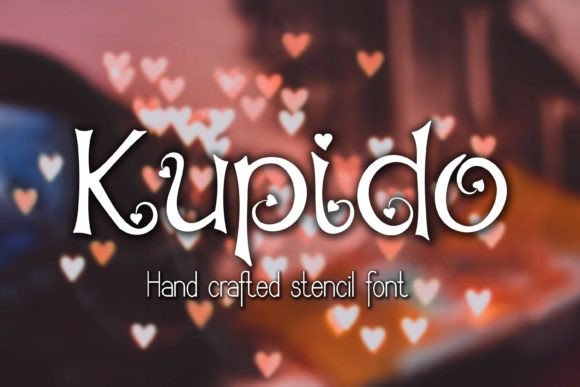
At its core, Kupido is a stencil font, a category of typeface where characters are formed with strategic breaks or bridges to allow for cutting out shapes, typically for spray-painting or screen printing. However, Kupido diverges from utilitarian stencil designs. Its defining feature is the incorporation of heart shapes within the letterforms themselves. These are not merely decorative additions but are structurally integrated, often forming the negative space or key strokes of the characters.
A critical technical aspect is that Kupido is a stencil font without closed loops on the characters. This means that letters like 'O', 'D', 'B', and 'P' are not solid, enclosed shapes. Instead, they are designed with breaks that align with the stencil aesthetic, ensuring the visual language remains consistent throughout the typeface. This design choice is fundamental to its look and its practical applications.
Reasons for Considering Kupido
Interest in a font like Kupido typically stems from a need for a highly specific aesthetic. It is not a general-purpose workhorse font but a specialized tool for creating a particular vibe. A designer might be drawn to it for several reasons:
- Thematic Resonance: For projects related to love, romance, Valentine's Day, community, or affection, the heart motifs provide an immediate and unmistakable visual cue. It can communicate the theme before the audience even reads the words.
- Playful and Youthful Tone: The combination of stencil construction and decorative hearts often results in a playful, slightly retro, or street-art-inspired feel. This can be effective for brands or events targeting a younger demographic or aiming for a casual, friendly tone.
- Creating a Distinct Look: In a landscape of clean sans-serifs and traditional serifs, Kupido offers a way to make a headline or logo instantly memorable. Its unique construction can help a design stand out in a crowded visual field.
Benefits, Tradeoffs, and Practical Considerations
Choosing a typeface involves weighing its advantages against its constraints. Kupido presents a clear set of tradeoffs that are essential to evaluate.
Key Benefits
- Immediate Visual Impact: Its primary strength is its ability to grab attention and convey a specific, decorative theme without additional graphics.
- Cohesive Decorative Style: Because the heart motif is woven into the font itself, it ensures a consistent and integrated design language, which can be more harmonious than adding separate heart icons to text.
- Stencil Functionality: The true stencil breaks mean it can be used in physical applications like cutting vinyl stencils for crafting, signage, or apparel, where a closed-loop font would be impossible to cut cleanly.
Important Tradeoffs and Considerations
- Readability at Small Sizes: The intricate details and breaks inherent in its design can reduce legibility, particularly in body text or at small sizes. It is best suited for headlines, titles, and short bursts of display text.
- Limited Application Scope: Its strong thematic presence makes it unsuitable for corporate, formal, or minimalist contexts where a neutral, professional tone is required. Using it for a law firm's website or a financial report would be inappropriate.
- Character Set Limitations: Decorative fonts sometimes have limited character sets. Before committing to Kupido for a project, it is crucial to verify that it includes all the necessary letters, numbers, and punctuation for your intended text.
- Potential for Overuse: Its novelty can wear off if overused. It is most effective as an accent font rather than the primary typeface for an entire project.
When is Kupido a Strong Fit?
Kupido aligns well with projects where the primary goal is expressive communication over neutral readability. Consider it for:
- Event Invitations and Greeting Cards: Especially for weddings, Valentine's parties, or community love-themed events.
- Poster and Banner Headlines: For campaigns related to charity, community support, or social causes centered on compassion.
- Niche Branding: For a small business like a bakery, a gift shop, or a dating app that wants a whimsical, approachable, and theme-forward logo.
- Crafting and DIY Projects: Its stencil nature makes it ideal for use with cutting machines (like Cricut or Silhouette) to create custom apparel, wall art, or decals.
- Children's Book Titles or Party Decor: Where a fun, decorative, and slightly informal aesthetic is desired.
When Might an Alternative Be Worth Considering?
There are clear scenarios where looking beyond Kupido is the prudent choice. An alternative may be more suitable if:
- Clarity and Legibility are Paramount: For body copy, legal text, instructions, or any context where information must be absorbed quickly and effortlessly, a clean sans-serif or serif font is necessary.
- The Brand Identity is Serious or Luxurious: For high-end fashion, luxury goods, professional services, or corporate communications, the playful decorative style of Kupido would clash with the desired brand perception.
- You Need a Versatile Font Family: Kupido is a single display font. If your project requires a range of weights (light, regular, bold, black) and styles (italic, condensed) for a full typographic system, you will need to pair it with a more versatile family.
- Digital Accessibility is a Priority: In web and app design, accessibility standards require high readability. Kupido's design may not meet contrast and clarity guidelines for primary text.
Making the Decision: Does Kupido Align with Your Goals?
To determine if Kupido is the right font for your project, ask yourself these practical questions:
- What is the primary message or emotion? If the answer involves love, community, playfulness, or a handmade feel, Kupido is a candidate. If the answer is professionalism, authority, or sleek modernism, look elsewhere.
- How will the font be used? Is it for a large headline on a poster, or for 12-point body text in a brochure? Its effectiveness drops dramatically as text size decreases.
- Who is the audience? Consider their expectations. A font that delights a young, creative audience may confuse or alienate a traditional, corporate one.
- Have I tested it in context? Always mock up the font in your actual design layout. Seeing "Kupido" next to your other design elements, images, and colors will give you the best sense of whether it works harmoniously.
In summary, Kupido is a specialized decorative stencil font. It is not a universal solution but a powerful tool for specific creative challenges. Its value lies in its ability to instantly communicate a thematic and aesthetic idea through its unique heart-integrated, open-loop character design. By carefully evaluating its benefits against its limitations and aligning its use with clear project goals, you can make an informed decision about whether this distinct typeface will add the right kind of value to your design work. Its suitability is ultimately defined by the intersection of its unique character and the specific communicative needs of your project.