Ceiba: A Deep Dive into This Artistic Display Typeface
In the crowded landscape of digital typography, finding a typeface that balances artistic flair with functional clarity is a constant challenge for designers. Ceiba emerges as a compelling contender in the category of decorative display fonts, specifically engineered to serve as a focal point in visual compositions. Unlike standard workhorse fonts designed for body text, Ceiba is built with a distinct personality, offering a solution for projects that require immediate visual impact and a departure from corporate monotony. This article explores the practical application, technical specifications, and ideal use cases for the Ceiba font, helping professionals determine if it aligns with their creative workflow.
Visual Identity and Design Characteristics
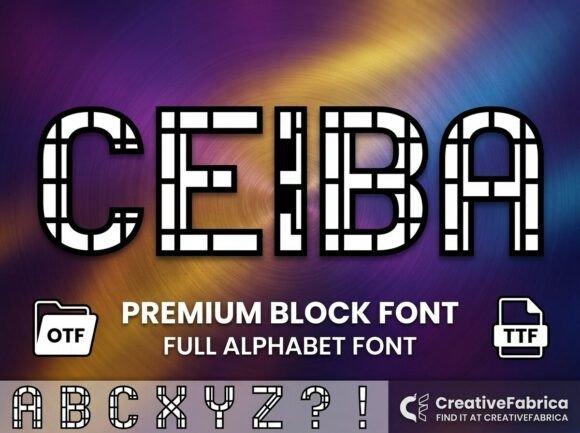
Ceiba is best described as a high-impact, all-caps display typeface. Its design philosophy centers on making every letterform a work of art. The characters often feature unique artistic elements—such as distinctive serifs, unusual proportions, or intricate detailing—that give the font a strong visual personality. This is not a font meant to blend into the background; it is designed to command attention.
The aesthetic of Ceiba leans towards the bold and expressive. It carries a weight and presence that makes it suitable for large-scale applications. However, despite its decorative nature, the design maintains a level of professionalism. The letterforms are crafted to ensure that while they are artistic, they do not sacrifice legibility for the sake of style. This balance is crucial for creators who want to break away from ordinary typography without risking the clarity of their message.
The All-Caps Constraint: A Design Consideration
A critical technical specification to note about Ceiba is its classification as an all-caps, uppercase-only typeface. This is a deliberate design choice common in display typography. The absence of lowercase letters is not a defect but a feature that reinforces the font's intended purpose.
In typography, mixing uppercase and lowercase letters (bicameral script) is necessary for long-form reading. However, for short, high-impact text—such as logos, hero headlines, or monograms—using all caps creates a stronger, more uniform visual block. Ceiba is optimized for this specific function. Users should approach this font with the understanding that it is a specialized tool for short-form communication, not a replacement for standard text fonts.
Practical Application and Use Cases
Understanding where Ceiba fits into a design workflow is key to leveraging its strengths. Its versatility lies in its ability to adapt to various creative contexts that demand a decorative touch.
- Logo Design and Branding: For startups or established brands looking to inject personality into their identity, Ceiba offers a ready-made aesthetic. Its distinctive letterforms can serve as a logotype or as a supporting font for brand slogans. It is particularly effective for brands in the lifestyle, fashion, entertainment, or artisanal sectors.
- Packaging and Labels: On physical products, shelf appeal is paramount. Ceiba can be used for product names or key descriptors on packaging to create a premium or bespoke feel. Its strong visual personality helps products stand out in a competitive retail environment.
- Editorial and Event Design: Magazine covers, event posters, and invitations often rely on typography to set the mood. Ceiba can provide the dramatic flair needed for a movie poster, a music festival flyer, or a high-end gala invitation.
- Digital Headers: In web design, hero sections and landing pages benefit from bold typography. Ceiba can be used for H1 or H2 headings to grab user attention immediately upon page load, provided the surrounding design remains clean to avoid visual clutter.
Technical Specifications and File Formats
For professional designers, the technical delivery of a font is as important as its visual design. Ceiba is provided in the two industry-standard formats: OTF and TTF.
- OTF (OpenType Font): This is the professional standard. OTF files offer advanced typographic features and superior compression. They are the preferred choice for modern design software like Adobe Creative Cloud (Photoshop, Illustrator, InDesign) and Affinity Designer. If your workflow involves complex layout software, the OTF version of Ceiba ensures maximum compatibility and performance.
- TTF (TrueType Font): This format ensures universal compatibility. While OTF is the professional standard, TTF is widely recognized across all operating systems and older software. Having the TTF version of Ceiba available ensures that the font can be used in standard office applications or legacy systems without technical issues.
By providing both formats, Ceiba ensures that creators can integrate the font into complex design workflows or simple document editing with equal ease.
Evaluating Usability and Workflow Integration
When evaluating a decorative font like Ceiba, usability goes beyond simple installation. It involves how well the font integrates into a designer's workflow and how reliably it performs under different conditions.
Kerning and Spacing: A common issue with decorative fonts is poor kerning (the spacing between specific pairs of letters). A high-quality display font should have carefully adjusted spacing to ensure that headlines look balanced without requiring manual adjustment of every character. While Ceiba is designed for high impact, users should test it in their specific software to ensure the default spacing meets their standards.
Rendering and Scalability: As a display font, Ceiba is likely to be used at large sizes. High-quality vector outlines are essential here. The font should render cleanly on both high-resolution screens (Retina displays) and in print at large formats. Pixelation or jagged edges at large sizes would undermine the professional finish the font promises.
Who Benefits Most from Ceiba?
Ceiba is not for everyone. It is a specialized tool, and its value is highest for specific user groups:
- Graphic Designers and Art Directors: Professionals who need a diverse library of typefaces for client projects will find Ceiba a useful addition for projects requiring a decorative, artistic style.
- Entrepreneurs and Small Business Owners: For those creating their own branding materials (DIY branding), Ceiba offers a way to achieve a professional-looking logo without commissioning custom lettering.
- Content Creators and Social Media Managers: Creating eye-catching thumbnails, Instagram graphics, or YouTube headers often requires bold text. Ceiba can help these creators produce visuals that stop the scroll.
- Publishers and Educators: For book covers, especially in genres like fantasy, romance, or children's literature, or for educational posters and materials, Ceiba can provide the thematic visual hook needed.
Limitations and Professional Considerations
No typeface is perfect for every situation, and a balanced evaluation of Ceiba must acknowledge its limitations. The most significant limitation is its uppercase-only restriction. This immediately disqualifies it for body text, long-form articles, or any context where sentence case is required for readability.
Furthermore, decorative fonts can sometimes be trend-dependent. A style that feels fresh today might appear dated in a few years. For long-term branding assets like logos, it is wise to consider whether the specific artistic style of Ceiba has enduring appeal or if it is tied to a current micro-trend.
Finally, because Ceiba is designed to be a "center of attention," it can easily overwhelm a design if not used judiciously. Pairing it with a neutral, highly readable sans-serif or serif font is essential. Using Ceiba for both headlines and sub-headlines, for example, would likely result in a chaotic and unreadable layout.
Conclusion: Is Ceiba the Right Fit?
Ceiba positions itself as a decorative display typeface for creators who value artistic expression and visual impact. Its strength lies in its ability to transform standard headlines and logos into focal points with a strong personality. The provision of both OTF and TTF files makes it a practical choice for modern design workflows.
For professionals seeking a reliable, all-caps display font for branding, packaging, or editorial design, Ceiba offers a polished and versatile solution. However, its specialized nature means it should be viewed as a complement to a broader typographic toolkit rather than a standalone solution. By understanding its uppercase-only design and applying it to appropriate short-form contexts, designers and creators can effectively leverage Ceiba to break away from the ordinary and elevate their visual projects.