Thread Your Way into Modern Design: Exploring the Arkin Typeface
Unraveling a New Standard in Textile-Inspired Typography
In the vast landscape of digital typography, finding a typeface that conveys genuine warmth and tactile quality can be a challenge. Most fonts prioritize clean lines and digital precision, often leaving behind the human touch that defines physical crafts. Enter Arkin, a display typeface designed to bridge the gap between the digital screen and the physical loom. It is not merely a set of characters; it is a visual experience that mimics the intricate, overlapping patterns of yarn and thread. For designers and business owners seeking to infuse their work with a sense of artisanal authenticity, Arkin offers a unique solution that is both bold and deeply textured.
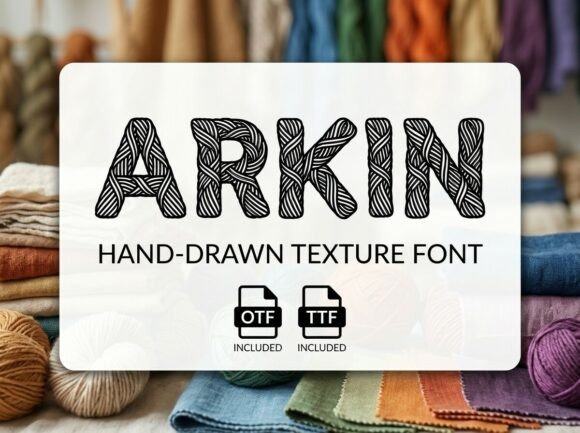
At its core, Arkin is characterized by its heavy structural weight and bold, rounded letterforms. However, what truly sets it apart is the internal texture. Instead of a solid fill, each letter is composed of intricate, hand-drawn yarn patterns. These overlapping strokes create a rhythm that feels organic and alive, capturing the essence of knitting, weaving, and tailoring. This design choice transforms standard text into a visual motif, making the font itself a central element of the design rather than just a vessel for information.
The Anatomy of a Tactile Font
Understanding the specific characteristics of Arkin is essential for utilizing it effectively. The font’s design philosophy centers on the concept of "woven-and-wonderful" aesthetics. The letterforms are substantial, ensuring high readability even when used for impactful headers. The "yarn" texture is carefully crafted to avoid visual noise; it maintains clarity while adding a layer of complexity that rewards closer inspection. This balance makes Arkin a premier choice for projects where the medium is the message—where the visual style needs to immediately communicate craftsmanship, care, and tradition.
Practical Applications: Where Arkin Shines
The versatility of a specialized typeface like Arkin allows it to serve a wide range of creative and commercial purposes. Its distinct personality makes it particularly well-suited for industries that value texture, materiality, and handcrafted goods. By integrating Arkin into a branding kit or design project, creators can instantly evoke specific emotional responses from their audience.
Branding for Artisans and Makers
For independent businesses, a logo is often the first point of contact with a customer. Arkin excels in this domain, particularly for:
- Knitting and Crochet Studios: The font’s internal patterns directly mirror the crafts these businesses sell, creating an immediate and intuitive connection.
- Boutique Fabric Shops: A logo set in Arkin conveys a sense of high-quality materials and expert curation.
- Sustainable Textile Packaging: As consumers become more eco-conscious, the "earthy," hand-drawn quality of Arkin suggests natural fibers and ethical production processes.
When used in a logo, Arkin does the heavy lifting of storytelling. It tells the customer, "We value tradition, we pay attention to detail, and our products are made with passion." This eliminates the need for excessive taglines or explanatory graphics, as the font itself embodies the brand's mission.
Digital Presence and Social Media
In the fast-scrolling environment of social media, capturing attention is paramount. The bold weight and unique texture of Arkin make it an exceptional choice for high-impact headers and social media graphics. Whether it is an Instagram story highlighting a new collection or a Pinterest pin featuring a DIY tutorial, Arkin creates a visual stop-sign that encourages users to pause and engage. Its heavy structure ensures that it remains legible on small mobile screens, while its artistic flair ensures it stands out amidst a sea of generic sans-serif fonts.
Evaluating Suitability: Strengths and Considerations
While Arkin is a powerful tool, effective design requires an understanding of a typeface's strengths and its limitations. No single font is the right choice for every project, and Arkin is best used in specific contexts to maximize its impact.
The Strengths of Texture and Weight
The primary strength of Arkin lies in its ability to convey "feel." In a digital world that can often feel cold and sterile, this font brings warmth. Its rounded letterforms soften the impact of its heavy weight, making it approachable rather than aggressive. This combination allows it to be used for both playful, whimsical designs and more serious, heritage-focused branding. Furthermore, the intricate texture adds a layer of perceived value; designs using Arkin often look more "expensive" or "premium" because of the visual complexity involved.
Limitations and Best Practices
Because Arkin is a display typeface with high visual complexity, it is generally not recommended for long-form body text. The intricate yarn patterns that make it beautiful at large sizes can become visually fatiguing or illegible at small sizes. Therefore, it should be paired with a clean, simple sans-serif or serif font for body copy. This contrast not only ensures readability but also highlights the unique qualities of Arkin by setting it against a neutral background.
When selecting colors for Arkin, designers should consider the "textile" metaphor. Earth tones, muted pastels, and rich jewel tones often complement the font’s organic texture. High-contrast neon colors can sometimes clash with the hand-drawn aesthetic, though monochromatic schemes (using different shades of a single color) can look incredibly sophisticated and modern.
Real-World Scenarios: Arkin in Action
To truly appreciate the value of this typeface, it helps to visualize how it functions in practical scenarios. Consider a sustainable fashion brand launching a new line of winter scarves. By using Arkin for the campaign headers, the brand immediately signals the product's material nature. The text doesn't just say "Warm Scarves"; the visual style feels warm and woolen.
Another scenario involves a community workshop. A poster for a "Learn to Knit" event using a standard corporate font might feel institutional and uninspiring. However, a poster set in Arkin feels like an invitation to a creative gathering. It suggests that the event is fun, hands-on, and community-oriented. The font acts as a silent ambassador for the experience the attendee will have.
Guidance for Evaluation
For professionals and creators considering Arkin for their next project, a simple evaluation process can help determine its fit:
- Identify the Core Message: Does your project aim to communicate craftsmanship, tradition, texture, or warmth? If the answer is yes, Arkin is a strong contender.
- Assess the Context: Will the font be used for headlines or logos? If so, its bold nature is an asset. If you need a font for 10-point legal text, look elsewhere.
- Test the Pairing: Experiment with pairing Arkin with a minimalist font like Helvetica or a classic serif like Garamond. The contrast should feel harmonious, not jarring.
- Check the Medium: While Arkin works well on screens, also consider how it might look in print. On high-quality textured paper, the effect can be stunning, further reinforcing the tactile theme.
Conclusion: Weaving Design into Reality
Arkin represents a shift in how we approach digital design—moving away from sterile perfection toward something more human and tangible. It is a tool for storytellers who want to weave a narrative of quality, care, and creativity into their visual identities. By understanding its features, respecting its context, and leveraging its unique texture, designers and business owners can use Arkin to create work that doesn't just look good, but feels real.
Whether you are designing a logo for a new sustainable startup or crafting a social media header for a creative community, Arkin offers a way to connect with your audience on a tactile level. It reminds us that in a digital age, the most powerful designs are often those that echo the materials and traditions of the physical world.