Chardonnay Script: A Detailed Look at This Premium Calligraphy Font
In the world of digital typography, selecting a script font often involves a trade-off between decorative flair and functional reliability. Chardonnay Script positions itself as a premium solution designed to bridge that gap. It is not merely a set of cursive letters; it is a comprehensive calligraphy system crafted to bring the nuance of hand-lettering into digital formats. For designers, typographers, and content creators, understanding the specific attributes of Chardonnay is essential for determining if it fits the technical and aesthetic requirements of a project.
The Craftsmanship Behind the Glyphs
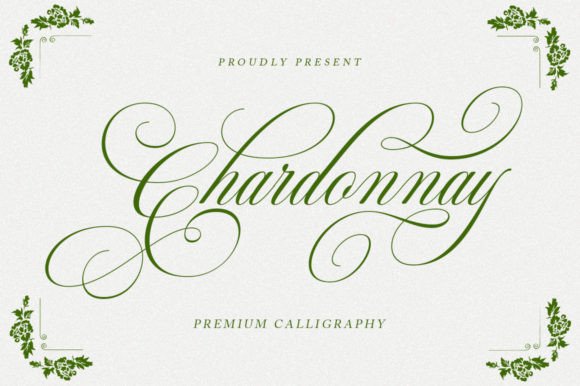
The distinctiveness of Chardonnay Script lies in its construction methodology. Unlike standard vector fonts that may look sterile or overly geometric, this typeface was handcrafted using a copper plate stylus. This origin gives the font an authentic, organic texture that mimics the pressure and flow of traditional ink work. The result is a visual warmth that synthetic fonts often lack.
Technically, the font is built as an OpenType file with PUA (Private Use Areas) encoding. This is a critical feature for users who may not have advanced design software. PUA encoding ensures that all decorative characters and alternates are accessible even in basic text editors, provided the user can access a character map. However, for the most seamless workflow, utilizing software that supports OpenType features—such as Adobe Illustrator, InDesign, or Photoshop—allows users to access these features automatically as they type.
Exploring the Feature Set: Alternatives and Styling
What sets Chardonnay apart from basic script fonts is its extensive library of OpenType features. A common frustration with script fonts is repetition; when the same letter appears twice in a word, the digital nature becomes obvious. Chardonnay Script addresses this through a robust set of alternatives and style sets.
By utilizing these features, users can cycle through different variations of lowercase letters to create a custom look. Furthermore, the inclusion of ligatures allows specific letter pairs to connect in a fluid, natural manner, eliminating awkward spacing. The addition of swashes provides the ability to add flourish to the beginning or end of words, which is particularly useful for monograms or drop caps. Every lowercase glyph has been stylized to ensure that the text feels genuinely hand-lettered rather than typed.
Ideal Use Cases: Branding and Event Stationery
Evaluating the fit of Chardonnay requires looking at the context of the project. This font excels in scenarios where elegance and personal touch are the primary goals. It is particularly well-suited for:
- Wedding Invitations: The copper plate heritage of the font gives it a classic, romantic quality that aligns perfectly with formal stationery.
- Branding: For businesses in the beauty, fashion, or boutique hospitality sectors, Chardonnay Script offers a high-end aesthetic that suggests exclusivity.
- Quotes and Art Prints: The stylized lowercase letters make short phrases visually engaging, ideal for posters or social media graphics.
- Greeting Cards: The font maintains legibility while providing the decorative appeal needed for celebratory messages.
Comparing Chardonnay to Alternatives
When researching typography options, it is helpful to compare Chardonnay against other categories of fonts to understand its trade-offs.
Script vs. Serif/Sans-Serif
While Chardonnay provides personality, it should rarely be used for body text. Long paragraphs set in Chardonnay Script can be difficult to read due to the connecting strokes and decorative nature of the glyphs. For readability in longer content, pairing it with a clean Serif or Sans-Serif font is the standard best practice. Use Chardonnay for headers and accents, and a neutral font for the message body.
Premium vs. Free Fonts
There are many free calligraphy fonts available, but they often come with limitations. Free options frequently lack the depth of OpenType features found in Chardonnay. Without style sets and ligatures, free fonts can look repetitive and require manual kerning adjustments. Chardonnay Script is a premium resource because it saves time in the editing phase; the built-in intelligence of the font handles the connections and variations automatically.
Modern vs. Traditional Calligraphy
Typography trends fluctuate between modern brush scripts and traditional copperplate styles. Chardonnay leans toward the traditional copperplate side. If a project requires a loose, "messy" brush look (often seen in bohemian or rustic designs), Chardonnay might feel too formal. However, for projects requiring structure, legibility within the script genre, and a timeless feel, it is the superior choice.
Decision Factors and Limitations
When deciding whether to use Chardonnay Script, consider the following factors:
- Software Capability: Do you have software that supports OpenType features? If not, you can still use the font via PUA, but the workflow will be slower.
- Color Palette: This font tends to look best in high-contrast scenarios (e.g., dark text on light backgrounds or metallic foil effects). It can get lost visually if placed on busy backgrounds.
- Scale: Because of its fine copper plate details, Chardonnay performs best at medium to large display sizes. It may lose clarity if printed very small.
Ultimately, Chardonnay Script is a specialized tool. It is not a "workhorse" font intended for every situation, but rather a "display" font designed to capture attention and convey a specific mood of elegance and craftsmanship. For designers working on branding, invitations, or artistic quotes, the investment in a premium font like Chardonnay