Integrating Black Crush: A Workflow for High-Impact Urban Typography
Understanding the Role of an Aggressive Display Typeface
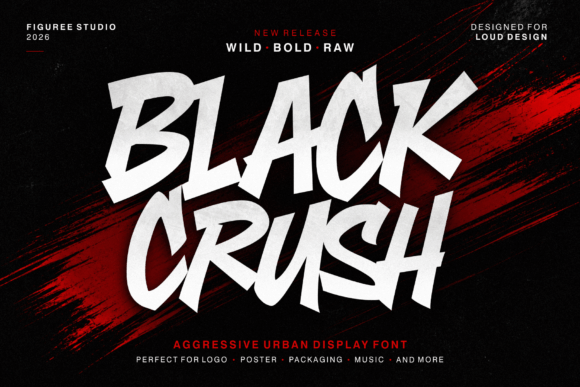
In the landscape of visual communication, typography is not merely about legibility; it is about immediate psychological impact. Black Crush enters this space as a specialized tool designed for high-stakes environments. As an aggressive urban display font, it features sharp character shapes and dynamic proportions that command attention instantly. However, introducing a font with such a distinct personality into a professional workflow requires more than just installation. It requires a strategic approach to planning, composition, and execution to ensure that the typeface enhances the message rather than overwhelming it.
For professionals ranging from graphic designers to marketing managers, the decision to use a font like Black Crush is often a tactical one made during the conceptualization phase of a project. This typeface is engineered for contexts where standard serif or sans-serif fonts fail to generate the necessary tension or energy. Its utility spans a wide array of applications, including video thumbnails, esports graphics, music artwork, and event promotions. By understanding the specific "voice" of this font—raw, intense, and uncompromising—creators can better plan their visual hierarchy before a single pixel is placed.
Strategic Implementation in Digital Workflows
The most effective way to integrate Black Crush into a workflow is to treat it as a focal point asset. In a standard design process, a creator might select a typeface after the layout is established. However, with a display font of this magnitude, it is often more efficient to build the composition around the typography. Because the font carries a heavy visual weight and a distinct urban attitude, it can serve as the anchor for the entire design structure. This is particularly relevant for social media content creators and digital marketers who need to stop the scroll immediately.
Consider the workflow for creating a series of YouTube thumbnails or Instagram stories. The initial step involves gathering the core message or headline. Once the text is finalized, the implementation of Black Crush can dictate the color palette and background imagery. For instance, the sharp edges of the characters often pair well with high-contrast backgrounds or gritty textures. By applying the font early in the drafting stage, designers can assess the "movement" within the composition and adjust other elements to complement the font's inherent intensity. This proactive approach prevents the common issue of retrofitting a chaotic font into a calm layout, which often results in visual discord.
Technical Integration and Compatibility
From a technical standpoint, ensuring a smooth transition from concept to final output is critical. Black Crush is designed to perform across both digital and print layouts, but the execution differs based on the medium. In digital environments, such as web banners or video overlays, the font's scalability is a key asset. Its bold construction ensures readability even at smaller sizes on mobile devices, provided the tracking (letter spacing) is managed correctly. When integrating this font into a web design workflow, it is advisable to test the rendering across different browsers and screen resolutions to maintain the intended visual impact.
For print applications, such as posters or flyers for event promotions, the preparation phase shifts to resolution and color management. The aggressive style of Black Crush relies on crisp edges to maintain its sharp appearance. Therefore, when moving from a digital workspace to a print-ready file, designers must ensure that the vector paths of the font remain clean and un-pixelated. This involves checking the font rendering at the final output size. Furthermore, because the font is designed to fill space, kerning adjustments may be necessary depending on the specific letter pairs used in a headline to ensure optical balance and consistent spacing.
Collaborative Workflows and Asset Management
In professional settings, such as agencies or marketing teams, the introduction of a new font like Black Crush requires a degree of organizational alignment. It is not enough for one designer to have the asset; it must be integrated into the team's shared library to ensure consistency across brand touchpoints. When using project management tools or cloud-based design platforms like Figma or Adobe Creative Cloud Libraries, the font should be categorized appropriately—perhaps under "Display" or "High Impact"—so that team members can locate and deploy it efficiently.
Moreover, when Black Crush is used for a client's brand identity, such as in gaming titles or esports logos, it becomes a long-term asset that requires quality control. Establishing a style guide that dictates how the font is used—specifying acceptable sizes, color combinations, and pairing fonts for body text—helps maintain brand integrity. This documentation ensures that whether the font is used by a freelancer, an internal designer, or a print vendor, the output remains consistent with the original creative intent. This process of standardization is vital for maintaining a professional appearance over time.
Practical Application: From Concept to Execution
To illustrate the practical utility of Black Crush, consider the workflow for an independent music artist releasing a new single. The goal is to create a cohesive visual identity for the release across streaming platforms, social media, and merchandise.
- Conceptualization: The artist and designer identify the mood of the track—let's assume it is intense and high-energy. They select Black Crush to represent this mood.
- Digital Asset Creation: The designer creates the album artwork using the font as the primary visual element. The dynamic proportions of the letters are used to create a sense of motion, perhaps overlapping with the central image.
- Video Integration: For the music video or lyric video, the font is imported into video editing software. The "raw urban attitude" of the typeface is utilized in kinetic typography, where text animates on screen in sync with the beat.
- Promotional Rollout: As the release date approaches, the same font is applied to event posters and social media banners. Because the font was established early, the visual language is already familiar to the audience, creating a seamless brand experience.
This example demonstrates that Black Crush is not a static element but a versatile tool that adapts to different stages of a project lifecycle. Its ability to function as a unifying element across various media types makes it a valuable asset for creators who need to maintain a consistent and impactful visual narrative.
Optimizing for Readability and Impact
While the primary function of an aggressive display font is visual impact, readability remains a non-negotiable requirement. Black Crush is designed with high visibility in mind, but practical implementation requires an understanding of context. For instance, using the font for long paragraphs of body copy would be counterproductive; its strength lies in headlines, titles, and call-to-action statements. In a layout, it should be paired with a simpler, more neutral typeface for supporting text. This contrast not only improves readability but also accentuates the boldness of the display font.
When planning a layout, consider the "negative space" around the typography. Because Black Crush has a commanding presence, it requires breathing room to function effectively. Crowding the text with too many competing visual elements can dilute its impact. Therefore, during the design process, it is often helpful to isolate the headline text and experiment with spacing. This ensures that when the viewer encounters the final product—whether it is a gaming title or a business banner—the message is absorbed instantly and with the intended emotional weight.
Long-Term Usability and Adaptation
For freelancers and small business owners, investing in a specialized typeface is a decision that should offer long-term returns. Black Crush fits into this category of assets that can be repurposed across multiple campaigns or projects. Its timeless "urban" aesthetic allows it to remain relevant across changing design trends, particularly in niches like streetwear, fitness, music, and entertainment.
As creators become more familiar with the font's character set—including its numerals, punctuation, and potential alternates—they can discover new ways to implement it. For example, a designer might initially use the font for a music poster but later find it effective for a local sports team's merchandise or a tech startup's launch event. By understanding the font's versatility and maintaining organized files, professionals can streamline their creative process, reducing the time spent searching for the "right" font and increasing the time spent on execution.
Ultimately, the integration of Black Crush into a professional toolkit is about enhancing communication. It is a solution for projects that demand more than just words on a page; they demand a visceral reaction. By following a structured workflow—planning the hierarchy, ensuring technical compatibility, and focusing on strategic placement—creators can leverage this typeface to produce work that is not only visually striking but also professionally sound.