Sunroof Summer: A Practical Guide to This Playful Display Font
In the vast world of digital typography, finding a font that captures a specific mood without sacrificing clarity can be a significant challenge. Designers and content creators are constantly balancing the need for personality with the requirement for legibility. Sunroof Summer enters this landscape as a distinct option, categorized as a summer-style display typeface. It is designed to evoke a sense of warmth, simplicity, and playfulness. This article provides a detailed evaluation of the Sunroof Summer font, exploring its aesthetic qualities, practical applications, and how it compares to other typographic choices available to professionals and hobbyists alike.
Defining the Aesthetic: What is Sunroof Summer?
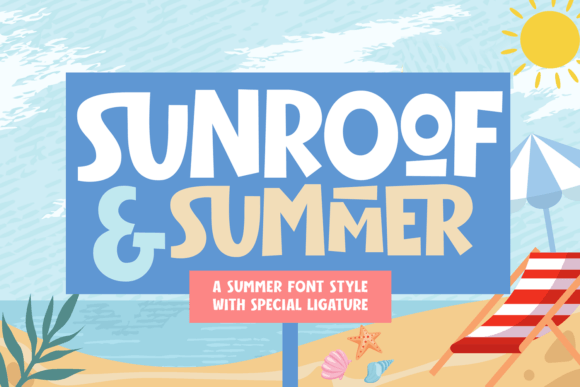
At its core, Sunroof Summer is defined by its visual simplicity and sweet character. Unlike complex serif fonts or rigid sans-serifs, this typeface prioritizes a friendly, approachable vibe. The design philosophy behind Sunroof Summer leans into the "fun" category, utilizing rounded edges and a casual flow that mimics the relaxed energy of a warm season. It is not merely a script font; it is a display font intended for headers, logos, and short bursts of text where mood is paramount.
The distinctiveness of Sunroof Summer lies in its ability to be expressive without being chaotic. Many decorative fonts suffer from illegibility because they prioritize style over function. However, Sunroof Summer maintains a balance. The letterforms are usually consistent in weight, creating a rhythmic visual flow that is easy on the eyes. This makes it a versatile tool for branding projects where the goal is to appear welcoming and informal.
Comparative Analysis: Sunroof Summer vs. Other Typographic Styles
When evaluating Sunroof Summer, it is helpful to compare it against broader categories of fonts to understand where it fits best. The decision to use a specific font often comes down to the "voice" of the project.
Sunroof Summer and Traditional Serifs
Traditional serif fonts (like Times New Roman or Garamond) convey authority, tradition, and formality. They are the standard for long-form body text in academic or corporate settings. Sunroof Summer stands in direct contrast to this. If your project requires a sense of gravitas or historical weight, Sunroof Summer is not the appropriate choice. Its sweet, casual aesthetic would undermine the seriousness of a legal document or a financial report. However, for a bakery logo, a children’s book title, or a summer festival poster, the serif font might feel too stiff, whereas Sunroof Summer would feel authentic and engaging.
Sunroof Summer and Geometric Sans-Serifs
Geometric sans-serifs (like Futura or Montserrat) are known for their modern, clean, and neutral appearance. They are the workhorses of the tech industry and minimalist design. While a sans-serif offers neutrality, it often lacks warmth. Sunroof Summer offers a solution for projects that feel too sterile with a standard sans-serif. For example, a wellness app or a coffee shop brand might find geometric fonts too corporate. Incorporating Sunroof Summer for headings can instantly soften the brand identity, adding a human touch that geometric fonts often strip away.
Practical Applications and Use Cases
The utility of Sunroof Summer is best understood through its application. Because it is a display font, it excels in specific environments and struggles in others. Understanding these boundaries is key to successful design.
Branding and Logo Design
One of the primary strengths of Sunroof Summer is in logo design. A logo needs to be memorable and instantly communicative. For businesses in the lifestyle, beauty, food, or leisure sectors, this font provides an immediate visual shorthand for "fun" and "quality." A logo set in Sunroof Summer suggests that the brand is approachable and customer-centric. It works particularly well for brands that want to appeal to a younger demographic or families.
Packaging and Physical Products
In the realm of packaging design, typography must compete for attention on a crowded shelf. Sunroof Summer is effective here because its simple, sweet look stands out against more complex design elements. It is particularly suited for:
- Greeting Cards: The font mimics the personal touch of handwritten notes, making it ideal for birthday or holiday cards.
- Package Design: For products like artisanal jams, summer beverages, or craft kits, Sunroof Summer reinforces the product's artisanal and homemade qualities.
- Book Titles: specifically in the romance, young adult, or children’s genres, where the cover art needs to convey a specific emotional tone.
Digital Media and DIY Projects
Beyond professional print, Sunroof Summer has found a strong foothold in the DIY and digital content space. Social media graphics, Instagram stories, and YouTube thumbnails often require fonts that are readable at a glance but visually distinct. Sunroof Summer fits this niche perfectly. It allows creators to add personality to their digital assets without needing extensive graphic design training. For craft design, such as vinyl cutting for t-shirts or mugs, the font's simplicity often translates well to physical mediums, ensuring clean cuts and legible results.
Evaluating the Tradeoffs: Strengths and Limitations
No font is perfect for every scenario, and Sunroof Summer is no exception. A balanced evaluation requires looking at both its strengths and its potential drawbacks.
The Strengths
- Instant Mood: Sunroof Summer immediately sets a positive, energetic tone. It removes the need for excessive imagery to explain the brand's personality.
- Versatility in Casual Contexts: It pairs well with clean sans-serifs. You can use Sunroof Summer for the main headline and a simple sans-serif for the body text to maintain readability.
- Accessibility: Unlike some highly stylized scripts that are impossible to read, the "simple" nature of Sunroof Summer ensures that the message is rarely lost.
The Limitations
- Readability at Small Sizes: As a display font, Sunroof Summer is not designed for body copy. Using it for long paragraphs or small captions will likely result in eye strain for the reader.
- Contextual Mismatch: Using this font for serious topics—such as medical information, financial advice, or obituaries—would be inappropriate and could damage the credibility of the content.
- Trend Sensitivity: "Summer" themed fonts can sometimes feel seasonal. If a brand wants to project a year-round, timeless image, relying solely on a font like Sunroof Summer might make the design feel dated after a few years.
Decision Factors: When to Choose Sunroof Summer
Deciding whether Sunroof Summer is the right resource for your project involves asking specific questions about your audience and goals. You should consider this font if:
- Your audience is consumer-facing: B2C (Business to Consumer) brands benefit more from the friendly nature of Sunroof Summer than B2B (Business to Business) brands, which often require more conservative typography.
- The project is visual-heavy: If your design relies on imagery and you only need text for emphasis, Sunroof Summer can act as a visual anchor.
- You are targeting a specific season or event: For a summer sale, a beach party invite, or a tropical-themed wedding, the thematic alignment of Sunroof Summer is unmatched.
Conversely, you may need to look for alternatives if your primary concern is corporate professionalism or if your content requires dense information delivery. In those cases, a neutral sans-serif or a traditional serif would be a more responsible choice.
Conclusion: The Value of a Thematic Font
Sunroof Summer is more than just a collection of glyphs; it is a stylistic tool designed to inject personality into visual communication. It serves a specific purpose in the designer's toolkit: to provide a simple, fun, and sweet aesthetic that resonates with casual and joyful themes. By understanding its place relative to other font categories and recognizing its ideal use cases—from logos to packaging—creators can leverage Sunroof Summer to make their projects feel more vibrant and connected to their audience. It is a practical choice for those who value warmth and approachability in their visual identity.