The Artistry of Amsterdam: A Deep Dive into a Modern Handwriting Font
In the vast digital landscape of typography, the search for a typeface that conveys both personality and professionalism can be a challenging task. While sans-serifs and serifs dominate the world of body text, the realm of display fonts and headings often calls for something more personal, more human. Enter Amsterdam, a font that has carved a unique niche for itself by blending modern elegance with the organic warmth of handwriting. This article explores the characteristics, practical applications, and technical nuances of the Amsterdam font, offering insights for designers, business owners, and creative hobbyists alike.
Defining the Visual Identity of Amsterdam
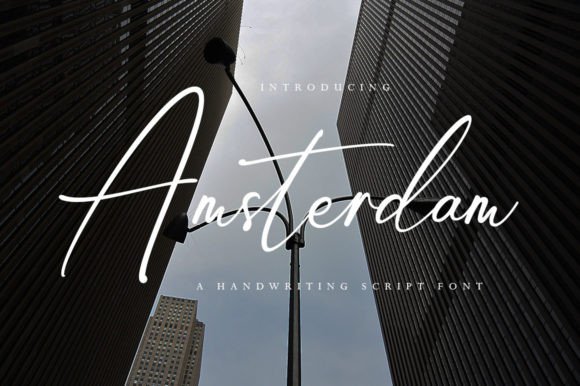
At its core, Amsterdam is a modern and elegant handwriting font. However, these descriptors only scratch the surface of its visual identity. The font is characterized by its flowing, connected letterforms that mimic the fluidity of a skilled calligrapher’s hand. Unlike rigid script fonts of the past, Amsterdam embraces an "extraordinary charm" that feels spontaneous yet controlled.
The anatomy of the font features varying stroke weights, which is essential for creating a realistic handwritten aesthetic. Thicker downstrokes and thinner upstrokes provide a rhythm to the text, preventing it from looking flat or mechanical. This dynamic quality makes it highly legible even at smaller sizes, a common pitfall for many script fonts where letters tend to merge into an unreadable blob. The spacing between characters is carefully calibrated to ensure that the words breathe, maintaining readability while preserving the connected nature of the script.
The Role of Ligatures and Glyphs
One of the standout technical features of Amsterdam is its extensive library of ligatures and alternates. In typography, a ligature occurs when two or more letters are joined to form a single symbol. In handwriting, we naturally connect letters in different ways depending on what precedes and follows them. Amsterdam replicates this digital intelligence.
The font is PUA (Private Use Areas) encoded, a technical specification that ensures users can access special characters regardless of the design software they are using. This is a critical feature for non-professional designers or those using software with limited OpenType support. It means that the stylistic swashes and unique letter combinations are not locked away behind complex menu systems but are readily available to enhance the design instantly.
Practical Applications: Where Amsterdam Shines
The versatility of the Amsterdam font allows it to transition seamlessly across various industries and mediums. Its "romantic, handwritten touch" makes it particularly effective in contexts where emotional connection and aesthetic appeal are paramount.
Branding and Corporate Identity
For businesses aiming to project a boutique, artisanal, or approachable image, Amsterdam is a powerful tool. It is particularly effective for logos in industries such as beauty, wellness, fashion, and hospitality. A coffee shop or a boutique clothing store, for example, can use Amsterdam to suggest that their products are crafted with care and personal attention. However, designers must exercise restraint; because the font is so stylistic, it is best used for headlines or logos rather than body copy to maintain brand clarity.
Stationery and Event Design
The font’s romantic undertones make it a natural fit for stationery and wedding designs. In the context of invitations, Amsterdam can evoke a sense of intimacy and celebration. It pairs beautifully with clean, sans-serif fonts for the details (date, time, location), creating a hierarchy that is both functional and beautiful. Beyond weddings, it is suitable for greeting cards, thank-you notes, and personalized stationery sets where a human touch is desired.
Digital Marketing and Social Media
In the fast-paced world of social media, grabbing attention is vital. Amsterdam serves as an excellent typeface for social media posts and advertisements. Its elegant curves can break up the monotony of standard web fonts, making a post stand out in a crowded feed. Whether used for a quote graphic on Instagram or a header image on a blog, it adds a layer of sophistication. Furthermore, its utility extends to photography watermarks, where it can protect intellectual property without detracting from the image itself, blending subtly into the composition.
Packaging and Product Design
Product packaging is often the first physical interaction a consumer has with a brand. Using Amsterdam on product labels can communicate quality and authenticity. This is especially relevant for handmade goods, cosmetics, or gourmet food products. The font suggests that there is a real person behind the product, fostering trust and emotional engagement with the consumer.
Technical Implementation and Best Practices
While Amsterdam is a robust font, its effectiveness depends heavily on how it is implemented. Understanding the technical aspects of the font ensures that the design remains professional and accessible.
Leveraging PUA Encoding
As mentioned, the PUA encoding is a significant advantage. For users working in environments like Adobe Illustrator, Photoshop, or even Microsoft Word, this encoding ensures that all glyphs are accessible. Designers should explore the character map of the font to discover alternate beginning and ending letters. Using these variations can prevent repetitive patterns, making the text look even more organic. For instance, if the word "Amsterdam" is used twice in a design, using an alternate "A" and "m" in the second instance can create visual interest.
Pairing Amsterdam with Other Fonts
A common mistake in typography is pairing two highly decorative fonts together. Amsterdam has a strong personality; therefore, it requires a "quiet" partner. Neutral sans-serif fonts such as Helvetica, Open Sans, or Lato are excellent companions. These fonts provide a clean, geometric counterpoint to the fluid, organic nature of Amsterdam. This contrast ensures that the hierarchy of information is clear: Amsterdam captures the emotion and the headline, while the sans-serif delivers the information.
Color and Contrast Considerations
The delicate strokes of Amsterdam require careful consideration of color and contrast. Because the font mimics a pen or brush, thin strokes can disappear if the contrast against the background is too low. It performs best in high-contrast scenarios, such as dark text on a light background or vice versa. When using it for logos or watermarks, testing the font at various opacities is crucial to ensure it remains legible without overpowering the underlying content.
The Psychology of Handwritten Typography
Why do fonts like Amsterdam resonate so deeply with audiences? The answer lies in the psychology of handwriting. In an era dominated by digital communication, handwriting has become synonymous with authenticity and effort. When a consumer sees a handwritten style font, they subconsciously associate it with a human element. It suggests that time and thought were invested in the communication.
This psychological trigger is why Amsterdam is so effective in advertisements and product designs. It bypasses the cold, corporate feel of standard digital text and appeals directly to the viewer's emotions. It creates a sense of intimacy, making the viewer feel as though they are receiving a personal note rather than a mass-market broadcast.
Considerations for Accessibility and Usability
While the aesthetic appeal of Amsterdam is undeniable, creators must balance beauty with accessibility. Handwriting fonts, by their nature, can present challenges for individuals with visual impairments or dyslexia.
Legibility vs. Readability
It is important to distinguish between legibility (the ability to distinguish individual letters) and readability (the ease of reading text blocks). Amsterdam excels in legibility for short bursts of text, such as logos or headers. However, for body text or long paragraphs, it is generally recommended to avoid script fonts. Large blocks of connected text can cause eye strain and slow down reading speed. Therefore, Amsterdam should be reserved for impact areas where the message is brief and the visual impact is the priority.
Size and Scalability
When designing for product packaging or photography, consider the final output size. Fonts that look beautiful on a computer screen may behave differently when printed on a textured label or viewed on a small mobile screen. Amsterdam maintains its structural integrity well, but testing at the intended output size is a necessary step in the design workflow. This ensures that the "extraordinary charm" does not turn into a cluttered mess at small scales.
The Future of Script Fonts in Design
The popularity of fonts like Amsterdam reflects a broader trend in design towards humanization. As AI and automation become more prevalent in content creation, the value of human-centric design increases. We are seeing a resurgence of hand-lettering and organic textures in web design and branding.
Amsterdam fits perfectly into this narrative. It offers the convenience of a digital font with the aesthetic of hand-crafted art. It allows designers to inject personality into their work quickly and efficiently. Whether used for a special event, a business logo, or a social media campaign, Amsterdam provides a bridge between the digital precision of modern tools and the timeless appeal of the human hand.
Ultimately, the Amsterdam font is more than just a collection of vector points; it is a tool for storytelling. By understanding its technical capabilities, such as PUA encoding and ligature usage, and by applying it thoughtfully within the context of design psychology and accessibility, creators can leverage Amsterdam to produce work that is not only visually stunning but also deeply resonant with their audience.