Fairy Spell: Unlocking Magic Without Falling for Common Font Pitfalls
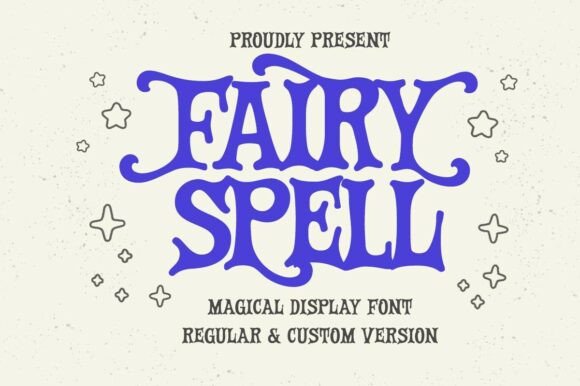
When you first encounter Fairy Spell, the reaction is often instant delight. It is a magical display font characterized by soft curves, playful serifs, and whimsical letter shapes that feel pulled directly from a storybook fantasy. The characters are bold yet friendly, featuring decorative details that add significant charm. For anyone working on titles, posters, book covers, or creative branding, finding a typeface that bridges the gap between "fun" and "functional" is rare. However, the very qualities that make Fairy Spell so appealing—its intricate details and personality—can lead to significant design mistakes if you treat it like a standard body font.
The primary misunderstanding with typefaces like Fairy Spell is assuming that "more magic equals more impact" in every context. While it works beautifully for invitations and kids' visuals, its whimsical nature requires a disciplined approach to typography. If you are a small business owner or a creative freelancer, using this font incorrectly can actually harm your brand's readability and professional presentation. To get the most out of this asset, you need to navigate the line between enchantment and clutter.
The Trap of Over-Decoration: Why Fairy Spell Isn't a Body Font
The most common error beginners make is selecting Fairy Spell for paragraphs or long-form text. Because the font is inspired by fantasy, it carries a high "visual load." The decorative serifs and unique curves demand the reader's attention. When you force readers to decipher these ornamental shapes for 100 words or more, the result is immediate eye fatigue.
Imagine you are designing a packaging label for a gourmet chocolate bar. You want to evoke a sense of wonder, so you use Fairy Spell for the brand name—that is the correct choice. However, if you use the same font for the ingredients list or the flavor description, the text becomes a visual blur. The "bold" nature of the font makes the small text appear messy and illegible.
The Better Approach: Hierarchy and Contrast
To avoid this, practice strict typographic hierarchy. Use Fairy Spell exclusively for display purposes. This means headlines, sub-headers, and short, punchy quotes. For the supporting text, pair it with a clean, neutral sans-serif font or a simple serif with low contrast.
- High-Impact Titles: Use Fairy Spell at large sizes (24pt and above) where the curves can breathe.
- Sub-headers: You can use a semi-bold weight of a sans-serif font to bridge the gap.
- Body Copy: Stick to highly legible fonts like Roboto, Open Sans, or Lato to ensure the "magic" of the title doesn't become a headache in the description.
By separating the "personality" font from the "utility" font, you maintain the whimsical charm without sacrificing usability. This approach ensures your creative branding feels professional rather than chaotic.
Ignoring Spacing: The "Crowded Castle" Effect
Another overlooked detail involves spacing, specifically kerning and leading. Fonts with storybook aesthetics, including Fairy Spell, often have irregular bounding boxes due to their swashes or soft curves. If you leave the default tracking (letter spacing) as is, the letters might collide, creating a "crowded castle" effect where the text looks tangled.
This is particularly problematic for entrepreneurs creating their own logos. You might type out your business name, scale it up, and think it looks fine on a small screen. But when you print it on a tote bag or a large poster, those tight collisions become glaring flaws. It makes the design look amateurish, suggesting a lack of attention to detail.
Practical Spacing Advice
When working with Fairy Spell, always manually adjust the spacing. Open your design software’s character panel and increase the tracking slightly, perhaps to +20 or +30, depending on the size. This allows the whimsical serifs to stand out without crashing into the next letter.
Furthermore, check the leading (line height). Because the font has a bold, friendly presence, it needs room to breathe vertically. A line height of 1.2x the font size is often too tight for decorative typefaces. Try increasing it to 1.4x or 1.5x. This extra white space frames the letters, making the text feel airy and magical rather than heavy and suffocated.
Context Mismatch: Knowing When the Magic Doesn't Fit
While Fairy Spell is versatile within the creative niche, it is not a universal solution. A significant mistake is forcing this whimsical aesthetic into contexts that require strict authority or corporate sterility. If you are a financial consultant or a legal advisor, using a font with "playful serifs" for your main brochure might undermine your credibility. It sends a subconscious signal that your service is casual or perhaps not serious enough for high-stakes work.
However, this does not mean you cannot use it for personal branding as a freelancer. The key is to evaluate the tone of your industry. For educators, children’s book authors, bakers, and event planners, Fairy Spell is a perfect match. It communicates warmth and approachability.
Checking for Cultural and Thematic Fit
Before committing to Fairy Spell for a major project, ask yourself: Does my audience expect wonder, or do they expect precision?
- Review Competitors: Look at other successful brands in your niche. If they use stark, geometric sans-serifs, introducing a heavy storybook font might make you look out of place.
- Test the Vibe: Create a mood board. If your visuals are dark, gritty, or hyper-minimalist, the soft curves of this font will clash violently with your imagery.
- Readability at Distance: If your primary use case is roadside signage, the delicate details of Fairy Spell might disappear at 60 mph. In that case, you need a font with high legibility at distance, not just high charm.
Technical Oversights: Licensing and File Formats
Finally, a practical warning for anyone ready to download or buy Fairy Spell. A frequent mistake is neglecting to verify the font license against your intended use. Many beginners download a font for "personal use" and then apply it to a logo for a client or a product for sale. This can lead to legal complications and unexpected costs later.
Ensure you have the commercial license if you are using it for packaging text, client work, or monetized content. Additionally, check the file format. For web use, you typically need .woff2 or .woff files, while desktop use requires .otf or .ttf. Using the wrong format can result in rendering issues where the "magic" looks pixelated or broken in the browser.
By respecting the technical requirements and understanding the visual limits of Fairy Spell