Kangmas: Bridging the Gap Between Retro Charm and Modern Design
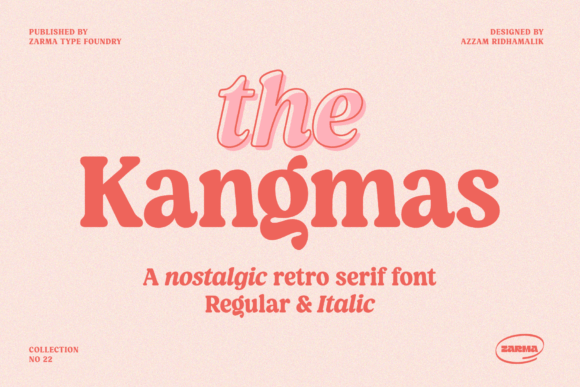
In the ever-evolving world of typography, trends often come full circle. The bold, rounded aesthetics of the 1970s have made a significant resurgence in contemporary design, yet the demands of modern legibility and digital interfaces require a fresh approach. Kangmas emerges as a standout solution in this landscape. It is a nostalgic retro serif font that does not merely replicate the past but reinterprets it. Featuring both regular and true italic styles, Kangmas draws heavy inspiration from the iconic "Cooper Black" typeface while integrating modernized letter shapes. This fusion creates a typeface that feels simultaneously familiar and innovative, offering a unique tool for designers, educators, and business owners aiming to capture attention with warmth and sophistication.
The Anatomy of a Modern Retro Typeface
To understand the utility of Kangmas, one must first examine its construction. The defining characteristic of this font is its rounded serif structure. Unlike sharp, high-contrast serifs found in traditional print media like newspapers, Kangmas uses soft, bulbous terminals. This softness is the key to its "nostalgic retro vibe." It evokes a sense of friendliness and approachability that angular fonts often lack.
However, the font avoids the pitfalls of being purely derivative. While the influence of Cooper Black is evident in the weight and roundness of the serifs, Kangmas incorporates modern letter shapes. This means the internal counters (the spaces inside letters like 'o', 'e', and 'a') are optimized for screen readability. The spacing is carefully managed to ensure that the text flows well in paragraphs, a common struggle with older, heavy retro fonts. The result is a typeface that carries the visual weight of a display font but possesses the legibility of a text font.
Psychological Impact and Brand Voice
Typography is never just about letters on a page; it is about the emotion those letters convey. The aesthetic of Kangmas triggers specific psychological responses that can be leveraged in branding and communication.
- Warmth and Nostalgia: The rounded edges of Kangmas subconsciously signal safety and comfort. For brands looking to appear approachable or "human," this font is a powerful asset. It recalls the optimism of mid-century design without feeling dated.
- Authenticity: In an era of sleek, geometric sans-serifs, a retro serif like Kangmas stands out as authentic. It suggests a brand that values craftsmanship and history.
- Playful Professionalism: Because Kangmas blends retro shapes with modern clarity, it strikes a balance between being serious and being fun. This makes it ideal for businesses that want to be taken seriously but do not want to appear stiff or corporate.
When a business owner selects Kangmas for their logo or website headers, they are making a statement that they value personality as much as they value modern standards.
Practical Applications Across Industries
The versatility of Kangmas allows it to be applied across a wide range of professional and creative contexts. Its dual nature—retro yet modern—makes it adaptable to various media.
1. Editorial and Publishing Design
For magazine headers, blog titles, and book covers, Kangmas provides immediate visual interest. The true italic style is particularly useful here. It offers a dynamic, flowing alternative to the regular weight, perfect for pull quotes or emphasizing key points in a layout. The font’s high legibility ensures that even at smaller sizes or on textured backgrounds (common in editorial design), the text remains clear.
2. Digital User Interfaces and Web Design
Web designers often struggle to find serif fonts that render well on low-resolution screens. Kangmas solves this with its modern construction. It is excellent for "Hero" sections on websites—those large banners at the top of a page. The font commands attention immediately, making it ideal for headlines that need to convert visitors into customers. Furthermore, its rounded nature softens the often harsh look of digital interfaces, making the user experience more inviting.
3. Packaging and Merchandise
The food and beverage industry, as well as lifestyle brands, frequently utilize retro aesthetics to signal quality and tradition. Kangmas fits perfectly into this niche. Imagine a coffee bag label, a craft beer bottle, or a vintage-style t-shirt. The font’s bold presence ensures the product name stands out on a crowded shelf, while its nostalgic vibe suggests a product made with care.
4. Educational Materials and Presentations
Educators and researchers can benefit from the clarity of Kangmas. While it is a stylistic font, its modern letterforms make it readable in presentation slides and educational handouts. It breaks the monotony of standard academic fonts like Times New Roman, helping to keep students and audiences engaged without sacrificing professionalism.
Technical Considerations: Regular vs. True Italic
A critical feature of the Kangmas typeface family is the distinction between its styles. It is important for creators to understand the difference between a "slanted" roman font and a true italic.
In many budget fonts, the italic version is simply the regular letters tilted slightly. Kangmas, however, features a true italic. This means the letter shapes are redrawn. For example, the lowercase 'a' and 'e' often change shape significantly in a true italic to mimic cursive handwriting. This provides a more authentic, fluid rhythm when used in body text or for stylistic emphasis. For designers, using the true italic of Kangmas adds a layer of typographic sophistication that is often missing in modern digital fonts.
Implementation Strategies for Creators
Integrating a strong personality font like Kangmas into a design system requires strategy to avoid visual clutter. Here are several approaches for creators and designers:
- The "Hero" Approach: Use Kangmas exclusively for H1 and H2 headers. Pair it with a clean, neutral sans-serif (like Helvetica, Arial, or Open Sans) for body text. This creates a high-contrast hierarchy that is visually pleasing and easy to navigate.
- The "Monochromatic" Look: Use Kangmas for both headers and body text, but vary the weight and style. Use the Regular weight for headers and the True Italic for sub-headers or captions. This creates a cohesive, immersive aesthetic perfect for artistic portfolios or fashion blogs.
- Retro Minimalism: Embrace the retro vibe fully but keep the layout minimal. Use Kangmas with plenty of whitespace and a limited color palette (e.g., cream and burnt orange). This highlights the unique curves of the font without overwhelming the viewer.
The "Cooper Black" Influence: A Nod to History
It is impossible to discuss Kangmas without acknowledging its debt to Cooper Black. Released in 1922, Cooper Black became the defining typeface of the 1960s and 70s counterculture, appearing on album covers like The Beach Boys' Pet Sounds and The Doors' The Best of The Doors.
Kangmas takes this legacy and refines it. Cooper Black, while iconic, can sometimes be difficult to read in long sentences due to its heavy weight and tight spacing. Kangmas addresses these technical limitations. By offering a more open spacing and cleaner curves, it retains the "groovy" spirit of the 70s while meeting the rigorous accessibility standards of the 2020s. It is a respectful evolution of a classic design.
Considerations for Accessibility
When using display fonts like Kangmas, accessibility must remain a priority. While the font is designed with modern legibility in mind, its decorative nature means it should be used thoughtfully.
- Contrast: Ensure high contrast between the text color and the background. The rounded serifs of Kangmas are thick, which helps, but low-contrast color combinations (like light grey on white) should still be avoided.
- Size: Use Kangmas at a comfortable reading size. While it works well as a display font at very large sizes, if used for body text, ensure the font size is at least 16px to maintain readability for users with visual impairments.
- Context: Be mindful of the audience. While the retro vibe is popular, ensure it aligns with the content's tone. For critical medical or legal information, a standard sans-serif might be safer, with Kangmas used only for section headers to add personality.
Future-Proofing Design with Kangmas
Design trends are cyclical, but good design is timeless. The reason Kangmas is effective is that it taps into a permanent desire for human connection in digital spaces. As artificial intelligence and automation become more prevalent in content creation, the "human" touch—represented by organic, rounded typography—becomes more valuable.
For business owners and researchers, adopting a font like Kangmas signals a move toward warmer, more engaging communication. It suggests that behind the screen, there are real people who appreciate aesthetics and history. Whether used in a startup’s landing page, a researcher’s presentation, or a hobbyist’s creative project, Kangmas offers a robust foundation for communication that is both beautiful and functional.
Ultimately, Kangmas is more than just a collection of glyphs; it is a bridge. It connects the playful optimism of the past with the clean efficiency of the present. By understanding its characteristics and applying it thoughtfully, users can elevate their work from merely functional to truly memorable.